Street Signal

Fayetteville.

College-town texture older than the tech wave. The most local-led of the five towns.

Imagery Esri / Maxar

Last updated · May 18, 2026

Quick read

The four signals to know first.

  • Local Authenticity High
  • Tourism Saturation Medium
  • Walkability High
  • Remote Work Viability Medium

See all twelve ↓

Places we read

The corners we keep returning to.

Three places that tell you what Fayetteville is right now — who is on the sidewalk at what hour, what the air smells like, what changes between Wednesday morning and Saturday night. We come back to each one regularly.

Dickson Street & West Avenue, Fayetteville · Wikimedia Commons (CC)

01 street

Dickson Street

“Live music four nights a week, and the bartender knows the band.”

Best · Thursday evening, 7pm walked May 17, 2026
Read our full note ↓

Dickson Street is what most of NWA pictures when they picture Fayetteville. Six blocks of brick storefronts running west from the railroad tracks toward Arkansas Avenue, with the Walton Arts Center anchoring the east end. On a Thursday evening at 7pm the sidewalks are full but not packed — the music rooms have not opened yet, the restaurants are turning their first table, the air smells like wood smoke from the smokehouse mid-block.

The honest reading: Dickson is louder than its marketing suggests. Friday and Saturday nights, the back of George's Majestic Lounge runs until 2am and the noise carries. Buy nearby only if game-weekend cheer and weekend nightlife sound like features. We tell mid-thirties remote workers thinking about Fayetteville to walk Dickson on a Thursday before deciding — Wednesday and Sunday read like different streets.

Voices · 1

Composite field voice

Will B.

Owner, Dickson Street music venue

“We have hosted Tom Petty, Wilco, and a lot of bands you have never heard of. Dickson Street is not Austin. It is not trying to be. The bands that play here either get that or they do not come back.”

Field-note composite. Patterns we hear at this corner, paraphrased. Real attribution swaps in on first signed interview.
Downtown Fayetteville from Old Main · Wikimedia Commons (CC)

02 plaza

The Square

“The Saturday farmers market is the most reliable read on who actually lives here.”

Best · Saturday, 8am farmers market walked May 17, 2026
Read our full note ↓

The Square hosts the oldest continuously running farmers market in Arkansas — every Saturday April through November, 7am to 1pm. We come at 8. The light is still low, the early crowd is regulars and farmers and a few cyclists rolling up off the Greenway. There are conversations in Spanish and Marshallese at the food stalls along the east side, German bakery smells at the southwest corner, and someone selling iris bulbs out of a wagon on Block Street most weeks in spring.

Off market days, the Square is quieter than you expect for a college town. The fountain runs, the courthouse is the courthouse, and the four-corners restaurants do steady-not-spectacular lunches. Come on Saturday morning. Come back on Tuesday afternoon. Both readings are honest.

Voices · 1

Composite field voice

Maria H.

Heirloom-tomato farmer, market vendor

“I have sold tomatoes on this Square every Saturday since 2004. The customers used to be all Fayetteville. Now half of them are Bentonville people who drove down. That is the change, in one sentence.”

Field-note composite. Patterns we hear at this corner, paraphrased. Real attribution swaps in on first signed interview.

overlook

Photo pending capture

36.0727°N · 94.1632°W

See on Google Maps →
We have not yet captured a photo of this place we would stand behind.

03 overlook

Wilson Park

“The neighborhood the Square pretends to be.”

Best · Sunday afternoon walked May 17, 2026
Read our full note ↓

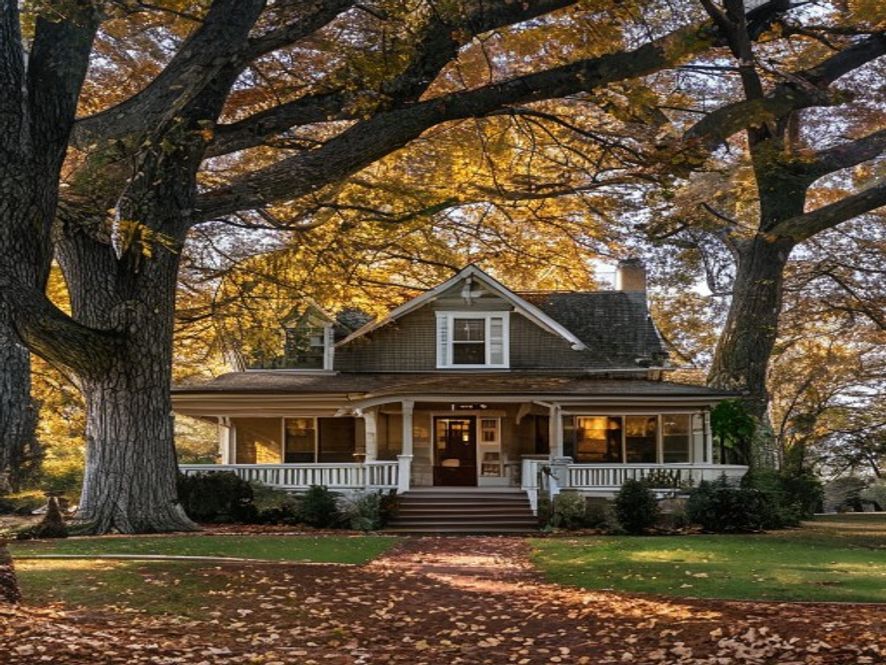
Wilson Park is six blocks north of the Square, and the neighborhood around it is the residential answer to the question "where should I live in Fayetteville." Mature oaks, sidewalks that work, mid-century cottages and bigger 1920s craftsmans on the streets running east. The park itself has a public pool, tennis courts, a creek running through, and the Castle — an actual mortared-stone castle the city built in 1979 that is somehow not a tourist attraction.

On a Sunday afternoon the park is families and dogs and the slow background of someone practicing trumpet from a side street. This is the Fayetteville block that will reward you most in 2030, and it is priced accordingly. If your budget is under $450K and you want walkable, this neighborhood is hard.

overlook

Photo pending capture

36.0667°N · 94.1460°W

See on Google Maps →
We have not yet captured a photo of this place we would stand behind.

04 overlook

Mount Sequoyah

“The view that tells you why this valley got settled.”

Best · Late afternoon, near sunset walked May 17, 2026
Read our full note ↓

Mount Sequoyah is the hill east of the Square — a winding climb past the old retreat center to an overlook with a Cross visible from most of central Fayetteville. From the top you can see the Razorback Stadium oval, the university tower, and on a clear day the I-49 corridor running north toward Bentonville. The neighborhood streets up here are quiet, the lots are oversized for Fayetteville, and the trees are old.

The honest read: Mount Sequoyah is a 6-to-9-minute drive to Dickson and a fifteen-minute walk down. The walk down is pleasant. The walk up is a workout. Anyone who tells you the hill does not matter has never carried groceries from the Harps on College Avenue. We tell buyers who think they want Mount Sequoyah to spend a Saturday walking it both ways before committing.

Old Main, U of A · Wikimedia Commons (CC)

05 plaza

Old Main · University of Arkansas

“The structural anchor that keeps this town from being any other town.”

Best · Weekday morning between classes walked May 17, 2026
Read our full note ↓

Old Main is the 1875 Italianate that anchors the University of Arkansas campus and shows up on every Fayetteville postcard. The lawn in front is criss-crossed with brick walkways and student footpaths. On a weekday between classes the campus reads like a working university — students with backpacks, faculty crossing to lunch, the carillon at noon.

For a buyer trying to decide between Fayetteville and Bentonville, this is the structural exhibit. The university generates a year-round economic floor — rentals, restaurants, school-year rhythm — that Bentonville's corporate base does not provide. The carillon also rings at noon and at 6pm on weekdays. If you live within four blocks of campus, you will hear it. Whether that is a feature or a bug depends on you.

Texture

How it feels at this hour.

Fayetteville wakes up later than Bentonville and stays up later than Rogers. The first sounds on a residential block off Wilson Park are bird traffic and a neighbor's screen door; the first sounds on Dickson are a bar back hosing the sidewalk. By nine the cafés are full of laptop-workers and a few professors grading. By noon on a weekday it reads as a university town doing university things — students moving between classes on the hill, the Square's lunch crowd thinner than the dinner crowd will be.

Game weekends are the other Fayetteville. On a fall Saturday at 11am, eighty thousand people pour toward Razorback Stadium and the air carries grill smoke and brass. The town flips. By Sunday morning it has flipped back. Both versions belong to the same blocks. If you wake up north of Maple Street most weekends, you will hear birds. If you wake up two blocks from Dickson on a game weekend, you will hear someone trying to find their car.

Trajectory

Where this is heading.

Confidence

Fayetteville is the slowest-changing of the five towns, and that is increasingly the asset. The university is not going anywhere. The Walton Arts Center, TheatreSquared, and the Botanical Garden expansion all sit inside the same five-mile cultural footprint. Walmart-vendor money lifts Fayetteville's restaurant economy at the margins; tech-transplant relocations land in Bentonville first and only spill south.

We expect Fayetteville to appreciate slower than Bentonville and steadier than Rogers through 2028. Game-weekend logistics will keep getting harder as the stadium expansion fills out, which compresses some Dickson-adjacent residential values into a narrower window of buyers who can tolerate the noise. The Razorback Greenway's full Bentonville–Fayetteville connection has changed the daily-cyclist commute pattern between the two towns in ways the housing market has not fully priced in yet.

Inside Fayetteville

3 sub-neighborhoods, each a different product.

Most relocators pick a town and stop. The sub-area within the town is the actual residential decision.

  1. 01 $$ — $325K to $625K typical

    Dickson Street + University core

    Walkable, university-adjacent, the most-active streetlife in town. Renters and student-housing dominate; ownership inventory is thin but distinctive.

    Best for

    Mid-career single or couple who wants Dickson access and a short walk to campus events.

    Trade-off

    Game-weekend noise, parking is a sport, and the back of Dickson runs late. Read the noise-profile signal before you commit.

  2. 02 $$ — $375K to $725K typical

    Wilson Park + Mount Sequoyah hillside

    Established residential blocks of mid-century cottages and 1920s craftsmans east of the Square, climbing the hill toward Mount Sequoyah. Mature oaks, sidewalks that work, the most coveted family residential in Fayetteville.

    Best for

    Family with school-age kids who values the school district, mature trees, and walking-to-Square distance.

    Trade-off

    The hill is real. Anyone who tells you it does not affect daily life has never carried groceries up Maple Street.

  3. 03 $$ — $300K to $525K typical

    Mission Boulevard / east Fayetteville

    Newer-build single-family east of the central core toward I-49 and the Botanical Garden. Less walkable, more lot, lower price floor, and an easier commute to Bentonville.

    Best for

    Family commuting to Bentonville who wants Fayetteville schools and a 30-percent-bigger lot at a lower price.

    Trade-off

    Walkability is poor. Cultural-density access requires driving back to the central core.

Beyond Fayetteville

Hidden gems within a short drive.

Caves, battlefields, working mills, conservation areas. The corners of the region most Fayetteville residents have driven past without stopping.

garden

garden · 14 min drive

Botanical Garden of the Ozarks

Forty-four-acre botanical garden on the northeast edge of Fayetteville. Most Razorback fans have driven past it on Highway 265 without noticing the entrance.

Open March through November. Twelve themed gardens including a Children's Discovery garden and the only Butterfly House in Arkansas (mid-May through September). Seven-dollar adult admission. Weekday mornings before 10am are the quietest read; weekend afternoons get bridal parties and photographers. The hiking trail loop is paved and stroller-friendly.

See on Google Maps →

natural-area

natural-area · 22 min drive

Lake Wedington Recreation Area

A 102-acre National Forest lake with six WPA-built stone cabins on the National Register of Historic Places, thirteen miles west of Fayetteville — known to fishermen and U of A forestry students, invisible to everyone else.

Address is 15592 Lake Wedington Entry Rd, Fayetteville AR 72704; take AR-16 west thirteen miles from downtown. Day-use fee applies (Recreation.gov pass, AP2760). The six 1930s CCC/WPA cabins can be rented through Recreation.gov for $30–60/night and are the least-known cabin stay in NWA. The eight-mile loop trail and seven-mile out-and-back give two full days of hiking. Midweek in September the bass fishing off the pier is exceptional. No cell service; bring a paper map of the trail.

See on Google Maps →

lookout

lookout · 27 min drive

Yellow Rock Trail, Devil's Den State Park

Devil's Den gets the headline but the 3.1-mile Yellow Rock sub-trail to the sandstone bluff overlook is what locals actually hike — the trailhead is separate from the main CCC area and most visitors never find it.

Park at the Yellow Rock trailhead off AR-74 inside Devil's Den (11333 W AR-74, West Fork, AR 72774). The hike gains 300 feet to an unobstructed view of Lee Creek Valley from atop a sandstone shelf. No extra fee beyond park entry (free for Arkansas residents). Weekday October mornings are ideal: foliage peak and no crowds. The 60 crevice caves are a separate system in the main CCC area — allow 3–4 hours to do both. Bring water; no water fountain at the Yellow Rock trailhead.

See on Google Maps →

trail

trail · 7 min drive

Kessler Mountain Regional Park

620 acres of forested mountain with 20 miles of trail and a summit at 1,856 feet, sitting inside Fayetteville city limits — chronic under-discovery because the entrance on Judge Cummings Road looks like a soccer complex.

Address is 2600 W. Judge Cummings Rd, Fayetteville AR 72701. Free admission, ample parking. The natural-surface trail network ranges from beginner loops to expert mountain bike lines; hikers use the green-rated loops freely. Summit views in fall are the best within Fayetteville proper. The Cato Springs paved connector links to the Razorback Regional Greenway for a full car-free day. Arrive by 7am on fall weekends before the soccer fields fill the lot.

See on Google Maps →

Full read

Twelve signals.

Each banded. Each with a confidence dot. How we score →

Street Signal

How we score →
  • Local Authenticity

    Dickson Street, the Square, and the residential blocks around the university have a continuous local culture going back decades. The tech-transplant wave hits Bentonville and Rogers first; Fayetteville absorbs it last and least. Most long-form Fayetteville restaurants have been here for more than ten years.

    High
  • Tourism Saturation

    Razorback football weekends are a different town than a non-game Saturday. Walmart vendors come down for Walton Arts Center programming. Day-to-day, foot traffic is locals plus students. Weekend-vs-weekday foot ratio under 1.5x outside game days; over 3x on game days.

    Medium
  • Walkability

    Dickson Street, the Square, and the university core form the most walkable district in NWA. Cafés, groceries, pharmacies, bars, music venues, parks within 600m of any central address. The hills do tax you — north and east of campus get steep.

    High
  • Remote Work Viability

    Café Wi-Fi is solid downtown — Onyx Coffee Lab, Puritan, Pressroom. Coworking density still lags Bentonville. Cox gigabit residential available across the central core.

    Medium
  • Noise Profile

    Dickson nightlife carries on weekends. Game-weekend cheer carries blocks from Razorback Stadium. Side streets two blocks back are a band higher. North of campus and east of Wilson Park, quiet.

    Medium
  • Social Energy

    Live music multiple nights a week. Independent bars, food, the Roots Festival, TheatreSquared. Sidewalk density on Dickson is the highest sustained in NWA outside Bentonville Square on a Saturday.

    High
  • Infrastructure Confidence

    Older grid means more occasional outages than Bentonville's newer build-out. Water, transit, and school zoning have been stable. The November ice storms hit harder here than further north.

    Medium
  • Long-Term Livability

    University anchor, cultural depth, lower price ceiling than Bentonville, and a school district most Fayetteville parents speak well of. Trajectory is steady, not explosive.

    High
  • Investment Stability

    Less appreciation upside than Bentonville. More stability through cycles. University demand keeps rental floors high year-round; this is the most landlord-friendly town of the five.

    Medium
  • Emotional Texture

    See texture paragraph below.

    Narrative
  • Cultural Density

    Walton Arts Center, TheatreSquared, the Roots Festival, the university museums and galleries, Crystal Bridges weekend daytrips. Independent music every week. Cultural density per capita is higher than Bentonville.

    High
  • Trajectory Confidence

    See trajectory paragraph below.

    Narrative

Curated

A small set of units, read carefully.

Talk to us

A question about Fayetteville?

We answer every email within four business hours. No drip campaign, no bot, no list resale. One person, one reply.